
Prp Therapy
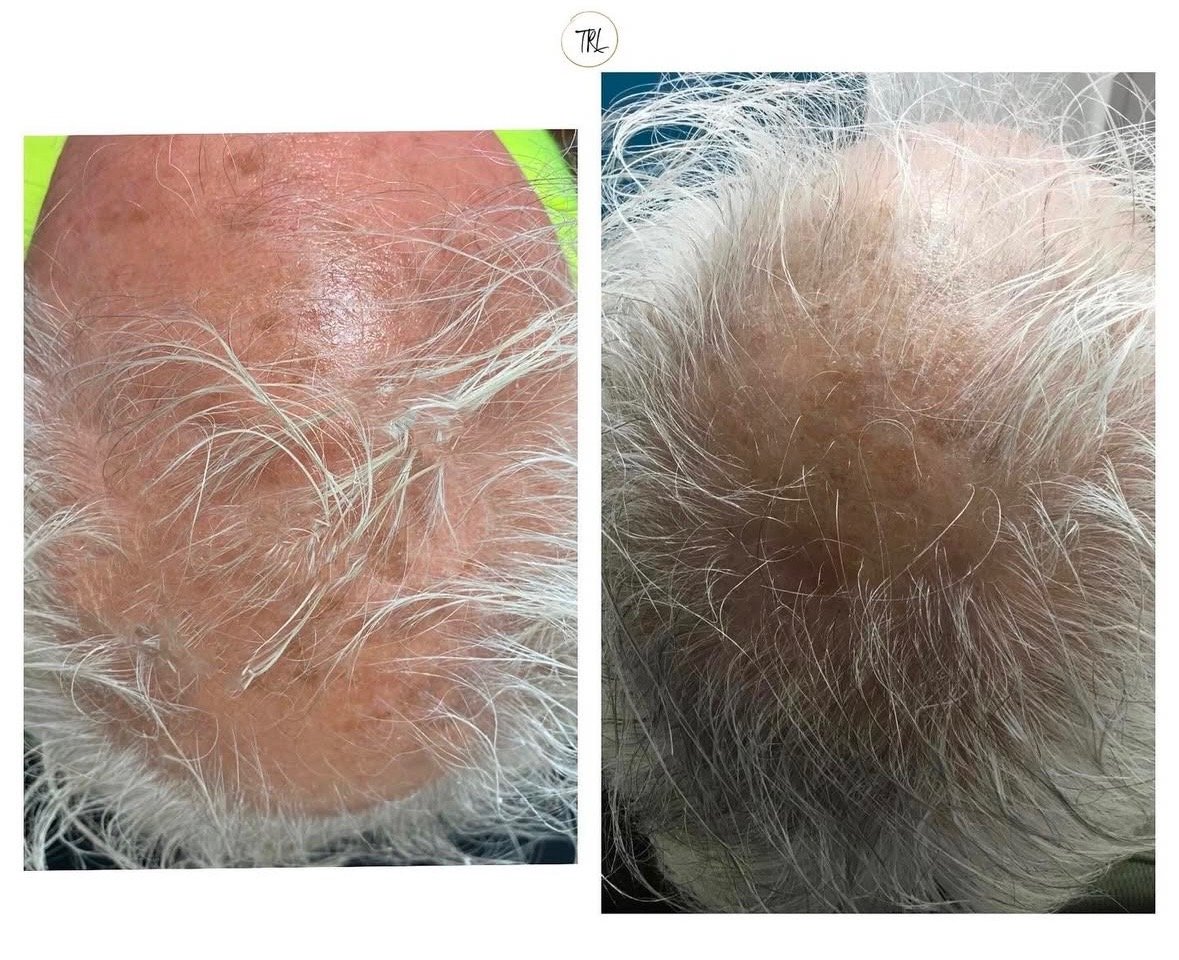
PRP, an acronym for "platelet-rich plasma," taps into the regenerative potential of your blood for accelerated healing, heightened growth factor stimulation, and increased levels of collagen and stem cells. These naturally occurring elements play a crucial role in maintaining a youthful appearance. In the context of PRP therapy, the concentrated growth factors are harnessed to aid in the rejuvenation of thinning hair, offering a natural solution to promote hair regrowth.

About
How Effective is PRP?
Although case studies have demonstrated patient satisfaction with PRP injections in some instances, the benefits may not be universal. Individuals with chronic diseases and thyroid imbalances, for example, might not experience long-term results. Cosmetic surgery cannot address underlying issues, and hair loss may persist. In such cases, alternative treatments, some outside the realm of dermatology, may prove more effective. For thyroid disease, oral medications could be a more suitable resolution.
how it works
The PRP injection process involves three key steps:
Your blood is drawn from your arm to initiate the therapy.
The drawn blood undergoes centrifugation, separating it into three layers: platelet-rich plasma, platelet-poor plasma, and red blood cells. The concentrated PRP is extracted for use, while the remaining components are discarded.
The PRP, also known as the "blood injection," is skillfully administered into your scalp using a syringe after the application of a local anesthetic.
before and after


Benefits
PRP injections offer versatile benefits for:
Both men and women in addressing various factors causing hair loss.
Individuals with androgenic alopecia or other forms of alopecia (male/female pattern baldness).
A diverse age group (18 to 72 years) based on successful clinical trials.
Those experiencing stress-induced hair loss.
Individuals with recent hair loss, as timely intervention enhances efficacy.
Those with thinning or balding hair (not completely bald), promoting growth in weakened follicles.
FAQs
Vampire Facial
-
The vampire facial starts with micro needling followed by the application of one's own plasma-rich platelet serum. It helps ramp up production of your skin's own collagen—the building block of a firm, bouncy, youthful complexion.
-
The injury from the micro needling allows for topical absorption of the PRP and creates small injuries which trick the body into thinking it has had a major injury. The response to this is stem cell production.
-
You will be topically numbed and cleansed, your blood will be drawn as you numb and then it will be spun in the centrifuge. Once the plasma is separated correctly, the provider will draw it up and apply it topically to the skin while micro needling.
-
Vampire facial can help with texture, skin tone, clarity, pore size, brightness, fine lines wrinkles, skin laxity, and stretch marks.
-
Numbing is 30 minutes and actual treatment is 15-30 min. Plan for 60 min in case of delay in obtaining blood etc.
-
Anyone who desires healthier, more vibrant skin. It is suitable for all skin colors and types.
-
● Pregnant clients, bleeding disorders and anticoagulants (must be approved by provider). Open wounds or poor wound healing, or keloids.
● Clients who are unable to stay out of the sun for 2 weeks before and 4 after.
● NO ACCUTANE FOR 90 DAYS BEFORE OR AFTER.
-
It is uncomfortable and can be painful depending on the depth of needed treatment. Micro needling can be unpleasant. We use topical numbing with BLT cream and can give nitrous if needed for a fee.
-
Just like micro needling, it depends on depth of treatment and how aggressive technician needs to be. Typically, you look terrible that day and leave with a bloody face. You leave your blood on for 5 hours then wash it off. May be red, bruised, swollen for 1-7 days depending on the treatment.
-
Avoid sun for 3 weeks before and 3-4 weeks after. You can cause hyperpigmentation if you have sun and heat exposure. Acyclovir is needed for a few days if the client has a history of cold sores.
-
Varies based on desired results and level of damage we are trying to correct. The average person should do 1 or 2 of these per year. Severe cases of scarring or texture issues may require more.
-
Results are permanent but you continue to age. Clients report improvements for as long as a year.
-
You can do them every 4-6 weeks depending on the strength of treatment.
-
As soon as 2 weeks but it can take several sessions and up to 12 weeks (about 3 months) after the last treatment.
-
1.) Active acne, especially inflammatory lesions
2.) Active herpes labialis or other localized infection in the treatment area, including warts.
3.) Moderate-to-severe chronic skin diseases such as eczema or psoriasis
4.) Patients with extreme keloidal tendencies
5.) Immunosuppressed patients, including patients on chemotherapy
6.) Care should also be taken in patients near (botulinum toxin) injection sites to avoid unwanted toxin diffusion
O shot
-
The injection of PRP into vaginal wall and clitoral area.
-
It creates a response in the body causing it to build new cells for collagen, strength, lubrication, and nerves.
-
The treatment is shown to help women with atrophy and age-related urinary incontinence, sexual satisfaction/sensitivity, and vaginal lubrication and sensitivity.
-
Any female desiring above effects.
-
No active uncontrolled diseases or long-term steroid use.
-
The entire process can take up to 60 minutes, but the actual injection is done in under 5 minutes.
-
The clitoral injection is painful, we offer topical numbing and nitrous if needed. After the procedure, you may feel like you are getting a UTI with frequency and urgency, this is normal and should be resolved that day.
-
We ask that you avoid intercourse for 48 hours (about 2 days).
-
As with all PRP, avoid steroids, NSAIDS like ibuprofen, and antihistamines like Benadryl. You will need to monitor your urine output to make sure you are passing urine and notify provider if problems. You may need a panty liner for an hour as the injections can cause some bleeding to the needle site.
-
One is enough for most women, but it is common to need 2-3
-
Results are permanent but we continue to age so a yearly session is common.
-
10-12 weeks (about 3 months)
-
Some women have immediate improvement of sensitivity. Some women it takes up to 12 weeks (about 3 months) after a second injection. It varies from woman to woman.
-
Women who are pregnant, trying to become pregnant, are nursing, are suffering from an active infection, have severe allergies, or who have experienced hypersensitivity in the past.
p shot
More info soon
-
Platelet rich plasma and platelet rich fibrinogen. These are components of your own blood and used to treat skin, scars, volume, and hair loss.
-
Both prp and prf are considered natural and regenerative in their qualities. The concentrated platelets and messenger cells in the plasma trick the body into launching a response which is creating new cells and stem cells. Essentially if done properly, when injected into an area, they will instruct the body to call for new cells that belong there. If injected into breast tissue, breast tissue cells will be made, if into a hair follicle, hair will be made, vaginal wall, vaginal cells made, etc.
-
It can help texture, volume, clarity, hair growth etc. Helps with lines, wrinkles, damaged skin, scars, stretch marks, under eye hollows and more!
-
Anyone in good health who is looking for anti-aging, anti-acne, scar revision, pore size, etc.
-
No pregnancy. No bleeding or clotting disorders, no one on steroid treatments.
-
Yes and no. If the hair follicle is still alive it will activate it to grow. If the hair follicle has already died (bald and shiny), then they are not a suitable candidate.
-
Appointment is anywhere from 30-60 minutes.
-
The blood draw is the same kind you have had at the hospital or in a doctor's office. The injections are uncomfortable but can be managed by topical or injectable lidocaine and numbing agents or nitrous are available for a fee.
Hair restoration
-
This varies based on the amount and location of injections. Most have redness and swelling for a few hours. Bruising can always happen with injections.
-
Minimize sun for a few weeks after. Wear mineral SPF. Use gentle cleanser and SPF. Most can resume normal skin care. Avoid heat, sun, sweating, and heavy face products for 24 hours. Mineral/medical makeup can be used after. Acyclovir may be needed if history of cold sores.
-
Varies based on skin or condition and desired results. Usually, 1-6 per year.
-
Every 6 weeks (about 1 and a half months).
-
Results are permanent, but aging will continue.
-
Some see results after one session and as soon as 2 weeks. Others may take multiple sessions and will wait until 12 weeks (about 3 months) post treatment to see full results.
-
1. Critical thrombocytopenia (low platelet count)
2. Hypofibrinogenemia
3. Hemodynamic instability (collapse)
4. Sepsis (infection)
5. Acute and chronic infections
6. Chronic liver disease
7. Anti-coagulation therapy (warfarin, dabigatran, heparin).
8. Pregnant or breastfeeding